

Coming Home to the Body
Awakening Through Awareness, Kindness, and Imagination.
A 7-Month Somatic Dharma Journey with Jill Satterfield
4-Month Teaching Immersion + 3-Month Community of Practice
Starts April 4th
Where mindfulness meets imagination—and the body becomes the gateway to freedom.

This Journey Is Different
Most mindfulness programs teach us to observe experience.
This journey invites you to inhabit experience, reshape it, and live from it.
Guided by Jill Satterfield—a pioneer of somatic meditation, subtle-body awareness, and trauma-sensitive movement—Coming Home to the Body offers a complete embodied path of practice. This path that integrates awareness, imagination, and kindness as living, felt capacities of the body.
This is not a technique-based course. It is a relational, experiential, and deeply human path—one that honors the intelligence of the body as a source of wisdom, resilience, and freedom.
Your Guide
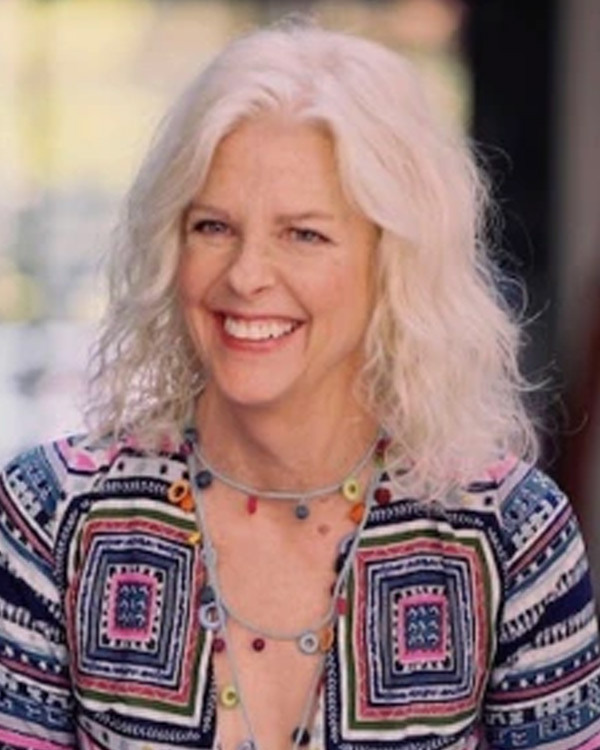
Jill Satterfield
Jill Satterfield has been a quiet pioneer in the integration of embodied awareness practices and Buddhist teachings for over 35 years. Her heart/mind and body approach developed from somatic and contemplative psychology, 37 years of Buddhist study, extensive meditation retreat time, and decades of living with chronic pain.
At the invitation of her primary teacher, Ajahn Amaro, Jill was the first person to offer mindful movement and somatic practices on silent retreats—first at Spirit Rock Meditation Center and then the Insight Meditation Society 30 years ago. She has since developed teacher trainings and mentoring programs that integrate embodied awareness with Dharma.
In addition to teaching embodiment and Dharma with Ajahn Amaro, she was also invited to teach on Tsoknyi Rinpoche’s retreats in the US and Nepal. It was at his urging that she began teaching subtle body practices to his students. She contributed movement and subtle body practices to his brother Mingyur Rinpoche’s retreats and was a consultant for his 2 best-selling books.
Jill’s Applied Embodied Mindfulness Trainings were part of UCLA’s Mindful Awareness Research Center. She was on the faculty for Spirit Rock’s Mindful Yoga and Meditation Training, was a mentor for Jack Kornfield and Tara Brach’s Mindfulness Teacher Training, the scholar and teacher in residence at Kripalu Center in 2003, and is a graduate of the Sati Center’s Buddhist Chaplaincy Training.
Her organization, School for Compassionate Action, was a training and service organization that taught mindfulness and somatic practices for chronic pain, illness, and post 9/11 trauma in NYC hospitals and at-risk facilities for over ten years.
She has been featured in and has written for numerous publications such as Tricycle, Lion’s Roar (who named her one of the 4 leading mindful movement teachers in the country), and the New York Times. She contributed to the book “Freeing the Body: Freeing the Mind” by Michael Stone.
Course Outline
A seven-month embodied path of mindfulness that helps you slow down, listen to your body, and relate to your inner life with kindness. This program offers practical, accessible practices for finding steadiness, emotional balance, and a deeper sense of ease in everyday living.
Settling the Body
Being With What Is
The foundation is capacity—the body’s ability to remain present as thoughts and emotions move through.
- Establishing balance and spaciousness in the nervous system
- Learning how breath can be shaped with care and choice
- Developing sensitivity to what the body needs moment by moment
Heartfulness
Emotions are met as felt energies, not problems to solve.
- Emotions as experiences housed in tissue and sensation
- Working gently with long-held emotional patterns
- Allowing change through softening rather than confrontation
Imagination
Imagination is a profound capacity for healing, intention, and evolution.
- Imagination as a guide toward how we wish to be
- The physiological effects of visualization
- Intention as embodied orientation rather than mental striving
Kindness
Kindness is not merely an attitude—it is a somatic state that can permeate the entire body.
- Kindness, tenderness, and receptivity as felt experiences
- Kindness as both gentle and fiercely ethical
- Responding to harm without hatred, to suffering without collapse
Program Structure
The Core Program — Months 1–4
Teaching Immersion
Learn Jill’s progressive curriculum establishing the body as a field of awareness, including somatic movement and meditation practices from the Buddhist and Yogic traditions.
You will learn to:
- Use the body as a refuge for rest and emotional regulation
- Sense experience directly—before story or habit
- Access imagination for physiological and psychological change
- Cultivate kindness as an embodied way of being
- Respond with choice rather than react from conditioning
MOnths 5-7
Community of Practice
For those who want to deepen integration, this optional continuation focuses on living the practice in daily life. This phase allows the teachings to take root slowly and steadily, honoring rhythm, difference, and personal timing. *
The Community of Practice is open to all students in the Teaching Immersion and those who have studied with Jill before. It can be added during or after the Teaching Immersion.
- Practice in real-time, real-world conditions
- Gentle experimentation and discovery
- Peer circles for shared exploration on specific themes and practices of interest
- Monthly themes to orient daily practice
- Refining what truly supports your life
* Can be added during or after the Teaching Immersion
Core Modalities
This multi-disciplinary somatic approach includes:
Breathing Practices
Attuned to your individual nervous system
Mindful Movement
Slow, intentional movement that meets you where you are
Subtle-Body Awareness
As a field of sensing and knowing
Embodied Imagination
To support emotional and physiological change
Heart Practices
Compassion, kindness, joy, and equanimity as felt experiences
Embodied Presence
For daily life, conversation, and relationship
“Bodies are lived sites of meaning.”
— Frantz Fanon
This Program Is For You If...
You’ve practiced meditation but feel disconnected from your body—or sense there’s a deeper integration waiting
You’re a Yoga practitioner, therapist, or teacher seeking to deepen your embodied understanding of the Dharma
You live with chronic pain, illness, or trauma and want practices that meet your body with kindness rather than force
You’re ready for a sustained journey—not a weekend workshop—that transforms how you live in your body
How You Will Benefit
Nervous System Regulation
Learn to recognize early signs of activation and return to balance through breath, posture, and embodied awareness
Emotional Resilience
Meet difficult emotions with tenderness rather than resistance, developing fluency and steadiness
Embodied Presence
Access a quality of presence that remains available in moments of challenge, intimacy, and choice
Freedom from Reactivity
Interrupt habitual patterns and respond with spaciousness rather than react from conditioning
Kindness as a Way of Being
Cultivate compassion not as an idea, but as a somatic state that permeates your body and relationships
Skillful Use of Imagination
Harness the power of visualization for physiological change, intention-setting, and healing
What Participants Say
Jill is a wonderful and generous teacher—thank you!
Truly an excellent experience. Well thought out curriculum and wonderful teacher.
Jill’s course has been incredibly supportive of my practice, my embodiment, and my healing. I am incredibly grateful.
Choose Your Path
Teaching Immersion
4 Months
- 4 live monthly teachings with Jill
- Guided practice recordings
- Home practice curriculum
- Q&A and embodied inquiry
- Optional peer reflection circles
- Lifetime access to recordings
Immersion + Community
7 Months
- Everything in Teaching Immersion, plus:
- 3 additional months of integration
- Ongoing peer circles for support
- Monthly themes for daily practice
- International sangha community
- Support from Jill's trained students
- Embodied inquiry through dialogue
Community of Practice
3 Months
- 3 months of supported integration
- Peer circles for shared exploration
- Monthly practice themes
- International sangha access
- Embodied inquiry practices
- Flexible start timing
Already enrolled in the Immersion?
Add Community of Practice →
Already enrolled in the Immersion?
Add Community of Practice →
Bring a friend and both save 15%
Learning in community deepens the practice. Register together and you’ll both receive a discount.
Program Logistics
TEACHING IMMERSION
(4 months)
4 Saturdays:
Apr 4, Apr 25, May 23, June 20
Time: 10am-4pm PDT
COMMUNITY OF PRACTICE
(3 months)
3 Saturdays from 10am-1pm PDT
July 11, August 8, September 12
FORMAT
Live + recordings
Each Month Includes
- Live teaching and guided practice with Jill
- Time for questions and embodied inquiry
- Home practices for integration
- Optional peer reflection circles
You’ll Also Receive
- Recordings of all sessions
- Guided practice audio library
- Access to international sangha community
- Support from Jill's trained students
Frequently Asked Questions
All sessions are recorded. Recordings and transcripts will be available after each session. Many participants find value in both live attendance and reviewing recordings at their own pace. The practices are designed to be accessible whenever you can engage with them.
Is this program right for beginners?
Yes. This program welcomes both newcomers and experienced practitioners. The practices meet you where you are, and Jill’s teaching style honors each body’s unique history and capacity. No prior meditation or yoga experience is required.
Plan for approximately 2-3 hours per month for live sessions, plus 15-20 minutes of daily home practice. The integration work weaves into your existing life rather than adding to your to-do list.
Most programs focus on observing experience. This journey teaches you to inhabit and reshape experience through the body. It uniquely integrates somatic awareness, imagination, and heart practices—developed over 35 years by a pioneer in the field.
Absolutely. Jill developed this work in part through her own decades of living with chronic pain. The practices are designed to be adapted to any body, and the approach is one of kindness rather than force. Many participants find this work particularly supportive for navigating pain and illness.
The core program is 4 months (Teaching Immersion). The Community of Practice (months 5-7) is optional and can be added during or after completing the immersion. You can start with just the 4-month commitment.
Do you offer financial assistance?
Scholarships are very limited and reserved for those who are truly experiencing financial hardship. Click here to apply.
What is your cancellation policy?
Teaching Immersion (Core Program)
- $25 cancellation fee for cancellations made before April 4
- $100 cancellation fee for cancellations made by end of day April 25
- No refunds will be issued after the second session on April 26
Immersion + Community (Complete Journey)
- $25 cancellation fee for cancellations made before April 4
- $100 cancellation fee for cancellations made by end of day April 25
Community of Practice (3-Month Add-On)
- $25 cancellation fee for cancellations made before July 11
- No refunds will be issued after the first session (July 12)
Ready to Come Home?
The body becomes not something to fix or transcend,
but a place to come home to.
Questions? Contact courses@spiritrock.org