For Men Who Want Strength Without Armor and Heart Without Collapse.
Strength with Heart is a 9-month training in embodied masculine maturity for men who want to become steadier, more honest, more connected, and more fully alive.
Through meditation, embodied practice, psychological insight, small-group connection, and real-life integration, you’ll develop the presence, courage, and emotional range to meet work, family, conflict, aging, purpose, and change with greater clarity and care.
Not a weekend breakthrough.
Not a masculinity makeover.
A sustained path for men ready to become more whole.
The strengths that got you here are real. They were never meant to stand alone.
Discipline, self-reliance, composure under pressure — these are genuine virtues, and they're enjoying a deserved resurgence. The difficulty isn't that they're wrong; it's that, held on their own, they harden. Self-reliance narrows into isolation, composure into disconnection, strength into rigidity.
The missing half isn't something a modern man has to invent from scratch. The capacities now being asked of men — presence, emotional range, the ability to stay open without losing one's center — have been mapped for centuries in the world's contemplative traditions.
Strength with Heart brings that older wisdom into the conditions of a contemporary life, with the tools, community, and time to make it hold.
What you’re actually stepping into
What this is, and what it isn’t.
+
What this is
A nine–month structured program with daily, weekly, and monthly commitments.
Designed to get real results in the lives of the men who participate.
A sustained practice path to become steadier, more honest, more embodied, and more relationally skillful over time.
A combination of contemplative practice rooted in Rinzai Zen and Insight Meditation, depth psychology, and somatic work.
A small, accountable community working with the same material at the same time.
Taught by three senior teachers with deep credentials in their respective traditions.
−
What this isn’t
A replacement for therapy. If you are working with serious trauma, active addiction, or acute mental health concerns, this complements that work — it does not substitute for it.
A weekend initiation or a one-time breakthrough event. The work here is incremental and cumulative.
The work meets a man wherever he is — building a career or winding one down, partnered or single, a new father or an empty-nester, and across the full range of backgrounds and identities men arrive with. The Guideposts don't assume one kind of life.
The integration
Four layers of change — in conversation, not in isolation.
Lasting change happens in four places: body, mind, heart, and spirit. Each
modality alone hits a ceiling. Together, each one unlocks the next.
01
Contemplative
Rinzai Zen sitting trains the strength side of practice. Insight
Meditation cultivates the heart side — mettā, compassion,
equanimity, joy.
02
Psychological
Parts work, attachment theory, and four decades of clinical group
facilitation with men provide the maps for how patterns formed and
how they shift.
03
Somatic
Breath, movement, and Northern Kung Fu embodiment sequences ground
the work in the body, where lasting change actually lives.
04
Relational
A cohort of men doing the same work at the same time, with weekly
check-ins and accountability partners. The pressure test for
everything else.
How the course works
The structure, plainly.
A steady rhythm of teaching, practice, reflection, and accountability.
Each month focuses on one of the Nine Guideposts — enough time to
learn the material, practice it in daily life, and bring real experience
back into the group.
DailyGuided 10–15 minute sittings, five days per week
Nine months. One Guidepost per month, including opening course overview and closing integration.
Opening
A four–hour orientation, community formation, and the first deep dive.
Monthly deep-dive
3–hour live session at the start of each month, taught by one or more of the main teachers.
Weekly check-ins
30–45 minutes, in weeks 2, 3, and 4 of each month. Smaller-group format with discussion, practice, and Q&A.
Embodiment
Breath, movement, and grounding practices tied to each Guidepost — drawing on various somatic traditions.
Accountability partners
Paired men share homework, insights, and challenges between sessions.
Closing
Final session brings the nine Guideposts into a single, lived practice.
The nine-month arc
The Guideposts.
A developmental arc. The work begins with awareness — learning to
notice what is actually happening in body, mind, heart, and relationships
— and moves outward into connection, courage, intention, centering,
care, building, leadership, and enjoyment.
01NoticeMost men are run by parts of themselves they cannot see. This month, we learn to see them.
Week 1Observe your inner “boardroom” — the parts, patterns, and sub-personalities making decisions for you. (Adapted from Internal Family Systems and parts work.)
Week 2Identify which board members dominate — the protector, the rebel, the inner critic, the romantic — and learn to pay attention to your impact on others.
Week 3Strengthen the integrated self that can hold all the parts and lead with wisdom.
Week 4Partner check-in: where reactive patterns showed up, and where you held your seat.
02ConnectConnection is not a luxury. It is, biologically and psychologically, a survival need — and a primary source of joy.
Week 1The biology and psychology of connection. Why isolation literally shortens men’s lives.
Week 2The cost of disconnection, and the cultural myths that keep men alone (the lone wolf, the self-made man, the strong silent type).
Week 3Reclaiming brotherhood. Practical skills for authentic, nourishing connection with other men.
Week 4Partner check-in: connection goals and first steps.
03CourageMost courage is not the heroism of saving someone from a burning building. It is the willingness to say the harder, truer thing in a small moment.
Week 1Redefining courage — from stoic suppression to skillful expression. The full range of bravery, from the obvious to the subtle, including the willingness to see different aspects of yourself: beauty, warts, and all.
Week 2Micro-bravery: small daily acts that expand the muscle.
Week 3How courage shifts across life stages and cultural contexts.
Week 4Partner check-in: where courage showed up, where it didn’t, and what’s next.
04IntendWithout intention, men default to whatever’s loudest — the inbox, the anxiety, the next obligation.
Week 1Slowing down enough to define a lived intention for relationships, work, and self.
Week 2Identifying who and what your purpose serves — yourself, others, or something larger.
Week 3Daily and weekly intention-setting practices.
05CenterStaying centered under stress is the foundation everything else rests on.
Week 1Recognizing fight, flight, freeze, and appease in real time. (Drawing on contemporary work in trauma physiology.)
Week 2Building the capacity to respond rather than react, especially under pressure.
Week 3Working with shame, fear, and failure without collapsing into them or attacking outward.
Week 4Partner check-in: moments you held center, moments you lost it, what shifted.
06CareMen are often conditioned to express care through doing rather than being — and to hide it altogether when it feels too vulnerable.
Week 1How men learn to mask care, and what that costs them and the people around them. The primary importance of compassion — toward both oneself and others.
Week 2The varied expressions of care: protective, stoic, relational, systemic. None are wrong; range and flexibility matter.
Week 3Orienting consciously around what you actually care about — and what you don’t.
Week 4Partner check-in: how care is showing up in action, not just thought.
07BuildWhat you build from here; the next twenty years → the decades ahead, wherever you're starting from.
Week 1Your inherited blueprint for building — survival, power, tradition, innovation, inclusion. Where it came from, and where it serves or limits you now.
Week 2Choosing what you actually want to build now: self, relationships, legacy.
Week 3Naming the obstacles — avoidance, burnout, fragmentation, confusion — and beginning to dismantle them.
Week 4Partner check-in: concrete actions taken and next steps.
08LeadLeadership is less about position and more about presence.
Week 1Leading from the inside out. Integrating purpose, structure, clarity, execution, empathy, and care.
Week 2Honest examination of how you have led — or failed to — in the past.
Week 3Resolving leadership paradoxes: structure and flow, vision and feedback, empathy and execution.
Week 4Partner check-in: real-life leadership challenges and what the “strength with heart” stance asks of you.
09EnjoyWe end with joy because joy is what makes a life not just bearable but delightful — and like every other capacity here, it can be trained.
Week 1Reclaiming joy as essential, not a reward for finishing the work.
Week 2Play as presence — sport, adventure, creativity, sensuality.
Week 3Working with the blocks to pleasure — guilt, overwork, disconnection, the conviction that you haven’t earned it.
Week 4Partner check-in: where aliveness has expanded.
How integration delivers results
The gap between trigger and response. That gap is the whole game.
Distance between trigger and response.
Everything else flows from the expansion of that gap. The better
marriage. The clearer leadership. The harder conversations handled
well.
Before
Trigger and reaction collapse together.
Months in
A half-second. A second. A pause.
Sustained
Pause becomes choice.
Trigger Response
01
Contemplative practice makes psychological work stick.
You can learn in therapy that you have a harsh inner critic, trace it
to your father, and understand it intellectually for years. None of
that stops the critic from running the show at 2am. What stops it is
the trained capacity to notice the critic arising — as a voice,
a tension, a mood — before it captures you.
02
Psychological work makes contemplative practice honest.
Meditation alone can become a form of avoidance. Parts work and
attachment theory ensure you aren’t just getting calmer, but
truly more whole — addressing the buried trauma and grief that
silence can bypass.
03
Somatic work translates change into the body.
Lasting change happens in the nervous system, not just the mind.
Embodiment rewires the physical threat responses that override good
intentions, so your capacity for patience and presence survives
high-pressure moments.
04
Relational practice is the proof.
The ultimate test of growth is how you show up with others. Small
groups and accountability partners provide the pressure test that
moves these skills from theory into lived reality — during
conflict, stress, and disappointment.
Where this sits in the landscape
Men have good options now. Strength with Heart is built around a different emphasis: deep integration over time.
Many men find that insights gained in isolation — whether through
therapy, retreats, or physical training — don’t always
translate into real-life changes. Lasting transformation requires
reaching the whole man: body, mind, heart, and spirit.
Integration is the hardest part, and it is the core of our offer.
Over nine months, we bring Zen and Insight Meditation, depth
psychology, somatic practice, and small-group accountability into one
conversation. New patterns get to meet the complexities of real life
— parenting, work, relationships — until psychological
insight and contemplative steadiness reinforce one another and become
a way of being.
This program is neither fast nor easy. It is designed
for the man looking to build a foundation that will hold for the next
twenty years.
The teachers
Decades in the work, in different traditions.
Clinical psychology, Insight Meditation, Rinzai Zen,
performance psychology, leadership development, and martial arts, — a rare integration under one roof.
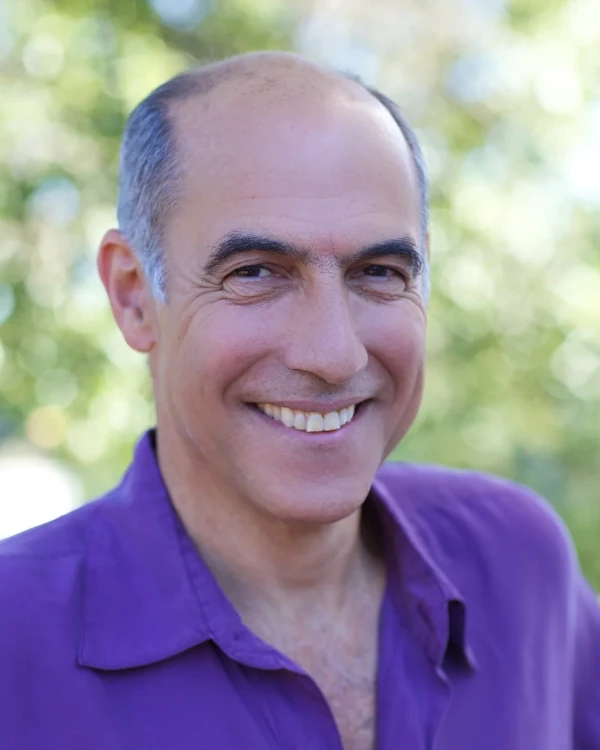
Daniel Ellenberg, Ph.D.
Depth psychology · men’s group facilitation
Psychologist with 40+ years leading men’s groups. Former
president of APA Division 51 (Psychology of Men and Masculinities).
Founder of the Men and Boys Compassion Coalition.
Brings to the program —
The depth in male psychology and group facilitation that anchors the program.
Daniel Ellenberg, PhD, has spent most of his life exploring one deceptively simple question: What helps people—and especially men—become both stronger and more wholehearted? He's come to believe that too many men have been handed a false choice: between toughness that manifests as heartless and tenderness that manifests as rudderless. Strength with Heart invites men to integrate toughness and tenderness into a wiser, more mature form of strength.
Daniel is a psychologist, leadership coach, and men's advisor. He founded Strength with Heart and the Men and Boys Compassion Coalition, and is a past president of the American Psychological Association's Division on the Psychology of Men and Masculinities.
With his wife, Judith Bell, Daniel co-created training programs for NASA and co-authored Lovers for Life. After more than 40 years together, he likes to joke (and it's no joke) that marriage has been his most humbling—and most rewarding—graduate program.
Daniel believes that alongside every man's desire for success, respect, and achievement is a deeper longing: to live with self-respect, self-love, purpose, and making a meaningful difference. He believes that potential is realized through the daily practice of courage, compassion, clarity, and accountability. When strength is guided by heart, men become more effective, more trusted, more deeply respected, and more fulfilled. That's the promise of Strength with Heart.
Read full bio
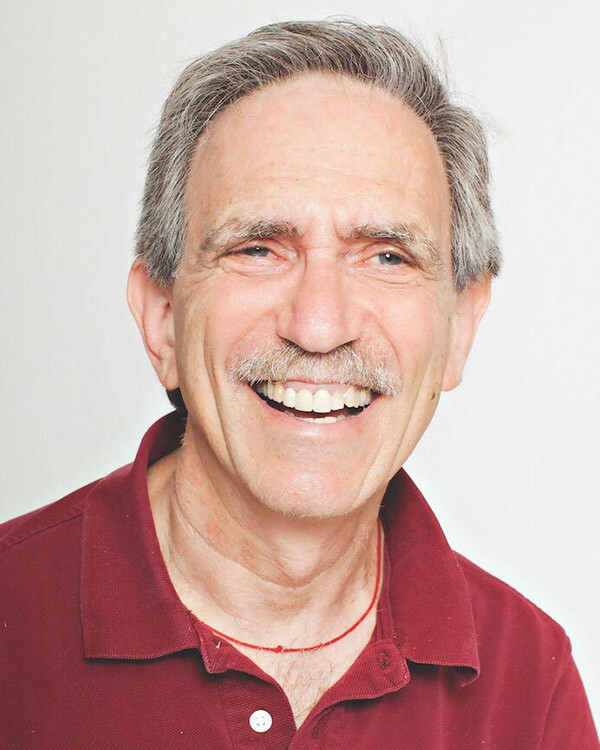
James Baraz
Insight Meditation · mettā, compassion, joy
Co-founding teacher at Spirit Rock Meditation Center and senior
Insight Meditation teacher for 40+ years. Author of Awakening Joy.
Brings to the program —
The contemplative weight of the Insight lineage and the embodied cultivation of joy that the final third of the program rests on.
James Baraz is a founding teacher of Spirit Rock Meditation Center. He has been teaching insight meditation since 1978. James started the Community Dharma Leader program, the Kalyana Mitta (Spiritual Friends) Network, the Spirit Rock Family Program and helped create the Heavenly Messengers Training Program. He co-authored Awakening Joy: 10 Steps to Happiness and Awakening Joy for Kids. James has been leading the popular online course "Awakening Joy" since 2003.
He is on the core teaching team of Spirit Rock's EcoDharma & Transformational Culture Program (ETCP) and serves as a guiding teacher to One Earth Sangha, a Virtual EcoDharma Center devoted to Buddhist responses to Climate Change. He leads retreats, workshops and classes in U.S and abroad. James lives in Berkeley, California with his wife, Jane. He has two sons and three grandchildren.
James emphasizes embodying Dharma principles of clarity and kindness. He tries to convey that the wisdom and compassion we are looking for is already inside of us. As we purify our mind and heart we naturally express that energy and help awaken that understanding and love in the world around us.
Read full bio
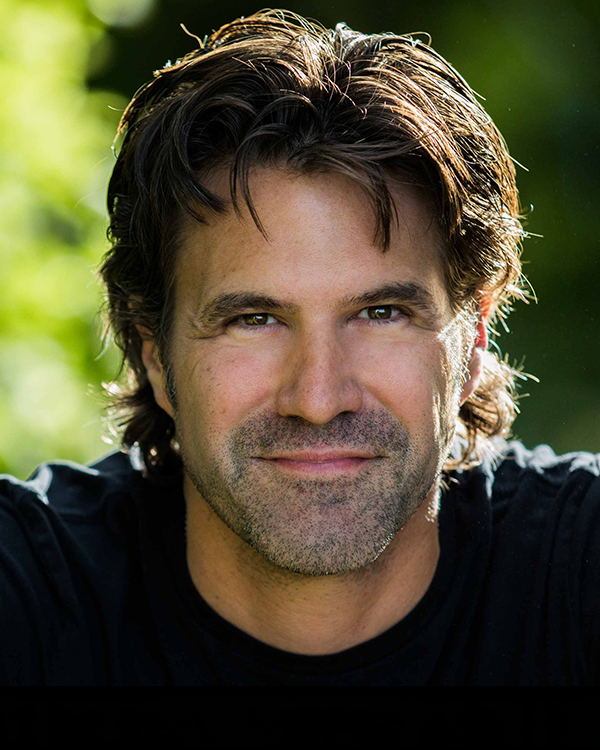
Keith Martin-Smith
Rinzai Zen · Northern Kung Fu · leadership
Ordained Rinzai Zen priest, lineage holder in Northern Kung Fu, and
leadership consultant to CEOs.Author of 5 books and an expert in Integral Theory. Leads the meditation and
embodiment curriculum.
Brings to the program —
The rigor of contemplative practice, the discipline of martial arts, and the pragmatism of working with leaders in high-stakes environments.
Keith Martin-Smith is an award-winning author, Zen priest, Northern Shaolin Kung Fu lineage holder, men's coach, and long-time practitioner of contemplative and embodiment traditions. His work lives at the intersection of spiritual practice, shadow work, masculine development, emotional maturity, and the practical demands of everyday life.
Keith has written, co-written, or couched authors on numerous books on awakening, personal transformation, leadership, and human development, and has worked closely with teachers and thinkers across the integral, Buddhist, developmental, and men's work worlds. As a coach and facilitator, he helps men cultivate greater honesty, courage, emotional range, embodied presence, and relational skill without losing their strength, humor, or edge.
Ordained in the Rinzai Zen tradition and trained deeply in martial arts, Keith brings a grounded, direct, and compassionate approach to transformation. He is especially interested in helping men bridge insight and action: learning to notice their patterns, take responsibility without collapsing into shame, speak the truth skillfully, repair when needed, and live with greater purpose, vitality, and heart.
Read full bio
Guest Teachers
Visiting voices across the nine months.
Eight guest teachers join across the arc, each bringing a distinct lens
to the Guideposts. Names announced ahead of enrollment.
Jack Kornfield
Pioneering meditation teacher and bestselling author
Jack Kornfield trained as a Buddhist monk in Thailand, India, and Burma. He holds a Ph.D. in clinical psychology and is a founding teacher of the Insight Meditation Society in Massachusetts and Spirit Rock Meditation Center in California. He is one of the key teachers to introduce mindfulness practice to the West and has taught internationally since 1974, Jack helped lead men's retreats for decades at Spirit Rock and in Mendocino with Michael Meade, Robert Bly, Luis Rodriguez and others.He is a husband, a grandfather and a mentor to many. He has published17 books which have sold 2 million copies.
Read full bio
Chris Germer
Co-founder of Mindful Self Compassion
Chris Germer, PhD is a clinical psychologist and lecturer on psychiatry at Harvard Medical School. He co-developed the Mindful Self-Compassion (MSC) program with Kristin Neff, which is being taught in 30 languages around the world. He authored or co-authored 6 books on self-compassion and on psychotherapy. A new book, Self-Compassion for Shame, will be released in October 2026. Currently, Chris lectures, writes and leads workshops internationally, and he has a small psychotherapy practice in Massachusetts, USA. His website is www.chrisgermer.com.
Read full bio
Paul Gilbert
Founder of Compassion Focused Therapy
Prof Paul Gilbert has been a clinical psychologist of over 45 years with the focus of working with people with mood disorders, complex shame and trauma, and harsh self-criticism. He is professor at the university of Derby and visiting professor at the university of Queensland Australia. He has published over 350 academic papers and 22 books. In 2006 he established the international charity the compassionate mind foundation (www.compassionatemind.co.uk) which is now one of the leading international organisations for the study of compassion and its applications. In recognition for his contributions to mental health he was awarded an OBE by the then UK Queen in 2011. He remains compassionate about the study of compassion especially its fears blocks and resistances.
Read full bio
Rick Hanson
Neuropsychologist and bestselling author
Rick Hanson, Ph.D., is a psychologist, Senior Fellow at UC Berkeley's Greater Good Science Center, and New York Times best-selling author. His seven books have been published in 33 languages and include Making Great Relationships, Neurodharma, Resilient, Hardwiring Happiness, Just One Thing, Buddha's Brain, and Mother Nurture-with over a million copies in English alone. He's the founder of the Global Compassion Coalition and the Wellspring Institute for Neuroscience and Contemplative Wisdom, as well as the co-host of the Being Well podcast - which has been downloaded over 25 million times. He offers free newsletters, and his online programs have scholarships available for those with financial needs. He's lectured at NASA, Google, Oxford, and Harvard. An expert on positive neuroplasticity, his work has been featured on CBS, NPR, the BBC, and other major media. He began meditating in 1974 and has taught in meditation centers worldwide. He and his wife live in northern California and have two adult children. He loves the wilderness and taking a break from emails.
Read full bio
Ashanti Branch
Founder of the Ever Forward Club
Ashanti helps transform schools into safer, more connected spaces through workshops and social-emotional learning products. With more than 18 years of experience in education reform and youth mental health, he is the Founder and Executive Director of the Ever Forward Club (EFC), a nonprofit focused on reducing dropout rates among marginalized students through youth mentorship and teacher professional development.
A 2023 recipient of the U.S. Surgeon General's Medallion, Ashanti is a keynote speaker, youth mental health consultant, Fulbright Fellow, and four-time TEDx speaker. His work as an "emotional locksmith" has been featured at SXSW, on CNN's This Is Life with Lisa Ling, The Kelly Clarkson Show, and in The Mask You Live In, a documentary on American masculinity that premiered at Sundance.
Raised in Oakland by a single mother on welfare after his father died before he was born, Ashanti began his career as a math teacher. EFC reports that 100% of its student members have graduated high school, 90% enrolled in higher education, and 0% became incarcerated.
EFC's projects include the Adventure Card Game and the Anthem Award-winning #millionmaskmovement, which has collected more than 75,000 masks worldwide.
Read full bio
Tony McAleer
Author and non-violence advocate
Tony McAleer spent fifteen years inside the white supremacist and neo-Nazi movements — the last several as one of its architects in Canada. Bravado and aggression were the currency; feeling anything was a liability. He was very good at it.
Two things pulled him out. The first was becoming a father — holding his newborn daughter and, for the first time, wanting to be the kind of man she could be proud of. The second was the inner work it took to get there: more than a thousand hours of counseling with Dov Baron, a Jewish man who met his confession with warmth. Being seen at his worst and not turned away became the seed of everything that came after.
He calls what he built radical compassion. It starts with the self, extends outward through fatherhood, friendship, and civic life, and rests on a simple idea: hiding from ourselves is the true cowardice, and nobody is irredeemable.
Read full bio
Steven Hayes
Founder of Acceptance and Commitment Therapy
Steven C. Hayes, Ph.D. is a Foundation Professor Emeritus of Psychology at the University of Nevada, Reno and President of the Institute for Better Health – a 45-year-old non-profit promoting quality services in mental and behavioral health. An author of 48 books and nearly 750 scientific articles, his career has focused on an analysis of the nature of human language and cognition and the application of this to the understanding and alleviation of human suffering. He is the developer of Relational Frame Theory, an account of human higher cognition, and has guided its extension to Acceptance and Commitment Therapy (ACT), a popular evidence-based form of psychotherapy that uses acceptance, mindfulness, and values-based methods to promote psychological flexibility. He is a co-developer of Process-Based Therapy (PBT), a new approach to evidence-based therapies more generally. His TEDx and YouTube talks for the public exceed 2 million views and his blogs at Psychology Today, Medium, and elsewhere have been read over 4 million times. Over 12 million copies of ACT books have been sold in virtually every language and his work is being put into nations in conflict around the world through the World Health Organization. He is among the most cited psychologist in the world.
Read full bio
Arthur C. Evans Jr., PhD
Founder of the Ever Forward Club and U.S. Surgeon General's Medallion recipient
Described as a visionary and transformational leader, policymaker and health care innovator Arthur C. Evans Jr., PhD, is CEO of the American Psychological Association, the leading scientific and professional organization representing psychology in the United States. With over 190,000 researchers, educators, clinicians, consultants and students as APA members, a top priority of Evans' current work is applying psychological science and knowledge to a wide range of complex societal issues. Previously, for over two decades, Evans served in public policy positions in Philadelphia and Connecticut, where he led the transformation of their behavioral health systems and their approaches to serving a wide range of individuals with complex needs. An unconventional leader, Evans has employed science, research, community activism, spirituality, traditional clinical care, policy, and cross-system collaborations to change the status quo around behavioral health. Over the years he has received national and international recognition, including prestigious awards in government, healthcare service, visionary leadership, actionable advocacy, equity, and social justice. He has held faculty appointments at the Yale University School of Medicine, University of Pennsylvania Perelman School of Medicine, Philadelphia College of Osteopathic Medicine, and the Drexel School of Public Health.
Read full bio
By the end of nine months
Men who are strong without being rigid. Open without being unmoored. Caring without being appeasing.
Over time, men in this work develop a quieter, steadier mind under pressure; a real sense of brotherhood after years of low-grade isolation; an inner strength that no longer depends on suppression; warmer, less defended relationships with partners, children, and colleagues; and a clearer, truer voice — the ability to say the harder thing without bracing for it.
01Recognize and work skillfully with internal patterns and parts.
02Build and sustain meaningful, nourishing connections with other men.
03Act with courage in the small, daily contexts where it actually matters.
04Live with greater clarity, purpose, heart, and intention.
05Stay centered under pressure and stress.
06Express care in grounded, embodied ways.
07Build self, relationships, and legacy with integrity.
08Lead with both strength and heart.
09Reclaim joy, play, and vitality as core capacities.
Enrollment
Begin the work.
Nine months of contemplative practice, depth psychology, somatic work,
and small-group accountability — taught by three senior teachers.
Questions about the program or pricing? Reach out — we’re happy to help.
Cohort size is limited to preserve the quality of the container.
Course Logistics
Dates & Details
Program Dates
First Saturday of each month · 10:00 AM–1:00 PM PT
October 3, 2026Opening · 9:00 AM–1:00 PM PT
November 7, 2026
December 5, 2026
January 2, 2027
February 6, 2027
March 6, 2027
April 3, 2027
May 1, 2027
June 5, 2027Final integration
All sessions are recorded and available on the course platform.
Monthly Teacher Q&A
Each month includes a live Q&A session with one of the course teachers. These sessions are an opportunity to ask questions, go deeper into the month’s Guidepost, and get direct guidance on how the material is landing in your life.
Home Groups & Accountability Partners
At the start of the program, you will be paired with an accountability partner. Together you’ll work through weekly practice assignments, share reflections, and support each other’s growth. In the fourth week of each month, you and your partner complete a structured check-in — reviewing where the Guidepost showed up in your life, where it didn’t, and what’s next.
Common questions
Frequently asked questions.
What is the course format?
Strength with Heart is delivered entirely online via live sessions. Each month opens with a 3–hour deep-dive taught by one or more of the three main teachers, followed by three weekly small-group check-ins (30–45 minutes each). You also receive daily guided meditations (10–15 minutes, five days per week), embodiment practices, and reflection prompts — all accessible on the course platform at your own pace between live sessions.
All live sessions are recorded. If you miss one, you can watch the recording before the next session.
How do I access the course platform?
After enrollment, you will receive a welcome email with login credentials and instructions for accessing the course platform at courses.spiritrock.org. All course materials — recordings, guided meditations, reflection prompts, and embodiment sequences — are hosted there. You can access the platform from any device with an internet connection.
Can I access the course materials after the program ends?
Yes. All enrolled participants retain access to all recorded sessions, guided meditations, and course materials after the program concludes. The live group check-ins and accountability partnerships end with the cohort, but the practice library remains yours to revisit.
Is there a group registration option?
Yes. If you would like to enroll with a friend, partner, or colleague, please contact us directly and we can arrange group registration. Please fill out this form with your group details
What is the cancellation and refund policy?
We understand that plans can change, and we're here to help.
If you need to cancel before the course begins, we'll provide a refund with just a $25 cancellation fee.
For cancellations made by the end of day on Nov 1st, we'll happily refund your payment, keeping only a $175 course fee.
After Nov 1st, we're unable to offer refunds. Thank you for your understanding.
To assist you with your cancellation, please reach out to us directly at courses@spiritrock.org. We'll take care of the process for you.
If you have any questions, we're here to support you. You can reach us by emailing courses@spiritrock.org
Do I need prior meditation experience?
No. The daily meditation practice is guided, and the curriculum is designed to meet you where you are. Whether you have sat for years or have never meditated, the program builds capacity progressively over nine months. The teachers are experienced at working with a range of backgrounds.
How is this different from other men’s programs?
Most men’s programs focus on one modality — a weekend retreat, a therapy group, a physical challenge, a meditation course. Strength with Heart is designed around deep integration over time: contemplative practice, depth psychology, somatic work, and relational accountability running together for nine months. The combination is what makes change stick. The teachers bring credentials across multiple traditions, not just one.
Strength with Heart
A nine–month program. Taught by Daniel Ellenberg, James Baraz, and Keith
Martin-Smith.
Enter your email below, and you’ll be provided a link where you can download the detailed syllabus.
We respect your inbox and your time. Rest assured, we will never send you spam.
Your submission was successful. All applications will be reviewed by September 30. Please keep an eye out in your inbox starting the week of September 28, when accepted applicants will begin to be invited to register for the program.
Use the link below to apply for a scholarship.
We offer scholarships on a case-by-case basis. We strive to offer our courses and other work with kindness, empathy, and respect for all. We are happy to provide scholarships if one is needed. If you would like to be considered for a scholarship, please click the button below to apply.
We respect your inbox and your time. Rest assured, we will never send you spam
Use the link below to apply for a scholarship.
We offer scholarships on a case-by-case basis. We strive to offer our courses and other work with kindness, empathy, and respect for all. We are happy to provide scholarships if one is needed. If you would like to be considered for a scholarship, please click the button below to apply.